A founder reflection on a decade of competitive intelligence
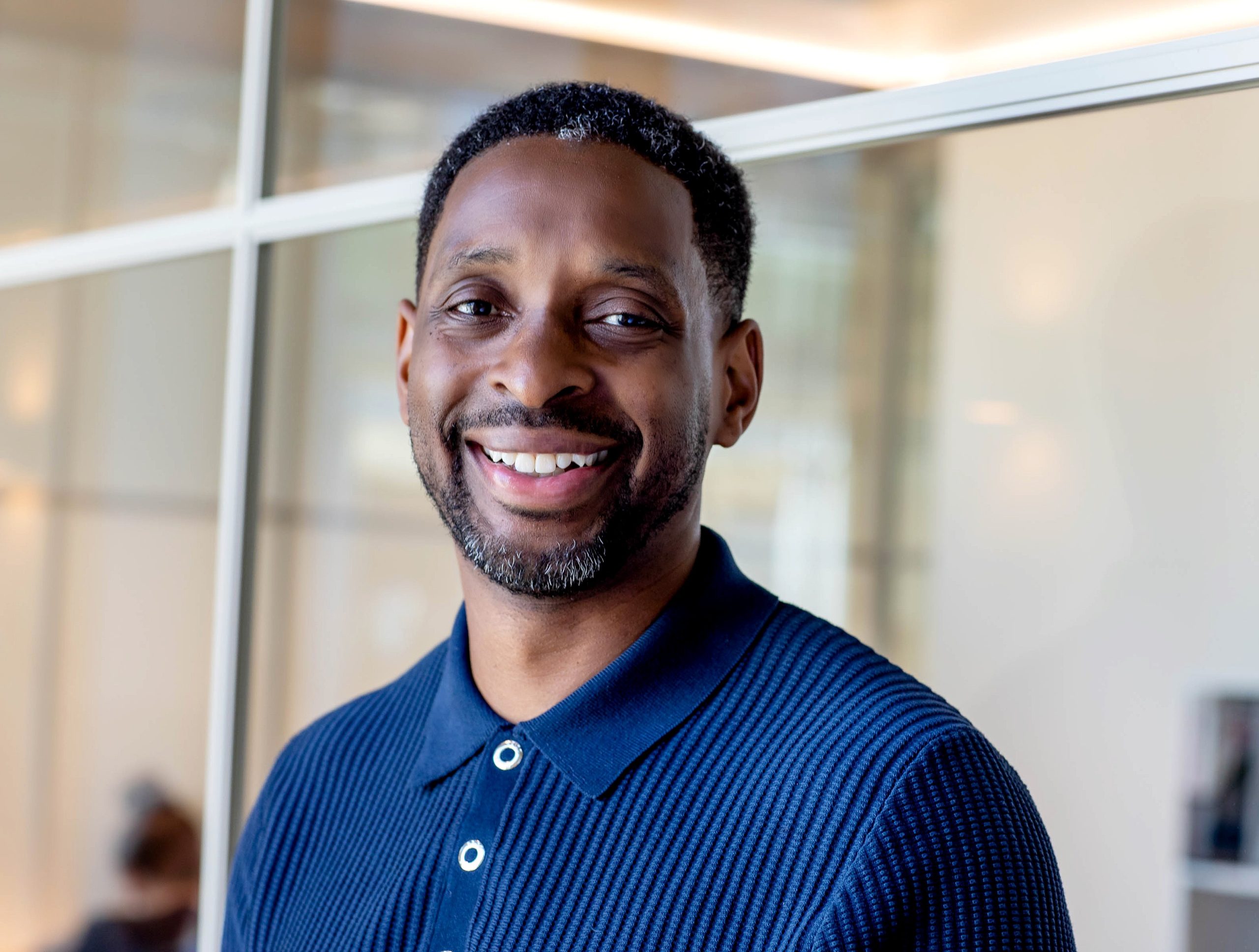
By Marcus Deans, Co-founder of Eradigm
From a desk behind Borough Market
When Patrick and I started Eradigm in 2016, we had a desk behind Borough Market, one employee and no clients. I had given myself roughly six months of savings to make it work. If the work had not come in by then, my fallback was straightforward: go back to contracting and keep the lights on. But, in all honesty, Eradigm had to succeed, as I had already decided I could not go back to being an employee.
Our first contract came a few months later – a modest piece of work, by today’s standards, for the German affiliate of a pharmaceutical company. It felt like a million-pound commission, not because it changed the business overnight, but because it told us somebody was willing to trust a brand-new company with something that mattered. By the end of that first year we had won a much larger project at the intersection of competitive intelligence (CI), market access and cell and gene therapy, and a handful of people had joined the company. Eradigm had started to feel real.
Ten years on, we are a team of around 50 supporting more than 20 active pharmaceutical and biotech clients globally. I am still surprised by the scale and sophistication of the conversations we now have every week. Every so often I look at the company – our leadership and delivery teams; finance, operations and HR functions; a proper development pathway for our people; and a genuinely global client base serving pioneers across research, clinical development and commercialisation – and reflect on what has become a truly established organisation.
Ten years earns a moment of honest and quiet reflection. Alongside raising a family and everything else life throws at you, I stepped away from the security of conventional employment and helped build something that has lasted. It has not, however, been uninterrupted or smooth progress. It has taken conviction, hard work, a fair few mistakes, and patience learned the hard way.
Building CI around decisions
Before Eradigm, most of my career had been in marketing, brand strategy and market access. I knew CI as an internal customer, not from inside the discipline. When I did work inside it, two things struck me. First, CI had an attractive long-term, relationship-based commercial model. Secondly, it was far more siloed from the rest of the commercial organisation than it needed to be.
Too much of the work stopped at information delivery. Teams could describe a competitive landscape in real detail without connecting it to the brand strategy or the decision the client actually had to make. Coming from adjacent disciplines, I could see the opportunity to make CI more strategic and more useful to a wider group of decision-makers. Patrick brought deep CI expertise; I brought commercial strategy and market access. Eradigm was built at the join between those two things.
Our belief was simple: a CI consultancy should not just collect data and hand it across the table. It should interpret it, challenge it and communicate a point of view. The question is not only ‘is this thorough?’ It is ‘what does this mean, what happens next, and what should the client do differently because of it?’ We have always wanted our people to think like consultants, not a delivery function.
Ambition and the judgement to refocus
For the first five years, growth sometimes felt almost too easy. We went from a tentative start to a multimillion-pound business faster than either of us had expected. For a period, it felt as though we could barely put a foot wrong. In 2022, off the back of a strong run, that success gave us the confidence to try several ambitious things at once – hire rapidly, open offices in New York and Switzerland, and build separate CI, market access and commercial strategy businesses.
It was too much, too quickly. We mistook breadth for progress, and assumed the momentum in our core business would simply carry over into new services and new geographies. It did not. By 2024 we had to accept it was not working, close both offices, unwind the expansion and refocus entirely on CI. Some of the people we had hired had joined because of the broader vision we had sold them, which made reversing course genuinely difficult. There was a fair amount of egg on both our faces, but also a newfound realism about how to take Eradigm forward and a clearer understanding of what CI buyers truly value.
I am still proud that we acted before ambition turned into stubbornness. It takes one kind of confidence to pursue an idea, and a different kind to admit it is not working. The experience did not make me less ambitious; it taught me to do one thing exceptionally well before reaching for the next. And it taught me something I would not forget: it is not as easy as it looks. Do not get carried away just because things currently are going right.
A partnership built on difference
Getting through those moments has depended enormously on how Patrick and I work together. We are equal owners; neither of us has ever had the casting vote. When two stubborn, competitive people reach an impasse, there is nowhere to hide – we have to talk it out, argue it out and land somewhere acceptable to both of us. What could have been a structural weakness turned out to be one of our greatest strengths. Over time we learned that approaching the same problem from different angles was not friction to manage; it was actually the core strength of the partnership. It has become one of the strongest relationships of my life.
Where technology ends and consulting begins
Some of the tools of CI today are close to unrecognisable from those we started with ten years ago. Technology can monitor more sources, triage information faster and surface patterns that used to take a team days to find. Through our partnership with Pharosyn, we have co-developed an AI- enabled platform around how our teams and clients actually work, while also strengthening our internal technology capability. The objective has never been technology for its own sake. It is to make our consultants more effective, because the technology needs to serve the judgement, not replace it.
AI will make us more efficient, and it will let us do more. What it cannot do is build a trusted relationship with a client. It cannot conduct a nuanced primary interview with a hard-to-reach source, or attend a medical conference in a far-flung location and engage KOLs and competitor sources on the ground. Nor can it read the politics of a client debrief, judge how an insight needs to land with different stakeholders, or know when a client needs to be challenged rather than agreed with. As access to secondary information, and the ability to process it quickly, becomes commonplace, the premium shifts further towards primary research, interpretation, communication and the confidence to hold a point of view. Human-led CI is not a rejection of technology. It is a clear-eyed view of where technology’s job ends and skilled human research and consulting begin.
That is also why workshops matter more to us now than they used to. A report can deliver a conclusion; a good workshop lets a client’s team interrogate it and build real ownership of the decision. As our senior team has grown more experienced, our ability to lead those rooms has grown with it – experience is what lets a consultant move beyond presenting findings to actually helping a client think.
A hothouse for talent
If I am proud of the business, I am proudest of its people. Eradigm has been a hothouse for talent – bright, highly qualified people put into demanding situations early, expected to care about quality and trusted to grow quickly. It does not suit everyone, but a lot of former colleagues have gone on to roles well beyond what their years of experience would ordinarily suggest, already knowing what good work looks like.
That culture also shows up in what happens after people leave the organisation. Eradigm alumni stay friends, turn up to each other’s weddings, and keep in touch long after they have moved to different companies and countries. A good number are coming back for our tenth anniversary. That tells me that Patrick and I have built more than a place of employment. The people here now carry the same sense of ownership – they protect the company’s reputation and behave, more often than not, as though it is theirs. In a real sense, it is. We are genuinely grateful to everyone who has come and gone for the building blocks they put in place to make Eradigm what it is today.
Relationships that endure
One thing ten years has taught me is that CI rarely develops in a straight line. Functions grow, fragment and rebuild as leaders, portfolios and corporate priorities change. Programmes expand, pause and restart. We have grown with clients of every shape and size, stepped back when their needs changed and re-entered at a different point in their journey. A relationship pausing does not necessarily mean it has failed. The understanding built during that relationship remains, and often allows you to reconnect more quickly and add value sooner when the need returns.
Our best client relationships have been built on the same principle. Consulting can easily become transactional. The strongest partnerships form when people invest beyond the immediate deliverable – when a client feels you genuinely want them to succeed and will stand alongside them through thick and thin, not that they are one project moving through a system. Eradigm sits in a useful middle ground: large enough for complex, global programmes, small enough that clients still get genuine attention.
Why CI matters more than ever
That matters more now than it ever has. Biopharma companies increasingly operate in crowded markets, where genuinely unserved disease areas are becoming rare. The easy blue oceans have largely gone. A successful launch and sustained commercial performance now depend on understanding your competitors more deeply than at any point in my career. AI will change how the signals are gathered; it will not remove the competitive pressure that makes CI necessary. If anything, that pressure is only building – which is why the CI professionals who thrive from here will be the ones who lead rather than wait to be briefed, bring a genuine point of view, and communicate clearly enough to inform or challenge a strategic decision.
Building something that lasts
Ten years brings pride, gratitude and a bit of vindication. Two people who did not know each other especially well decided to leave conventional employment, build something together, and trust they would work out the hard parts as they went. We did – though never without considerable effort and, at times, pain.
If there is one thing this decade has taught me, it is that you can only wing it for so long. Instinct gets a business through its first few years; sustainable success needs systems, leadership, training, financial discipline and the patience to build things properly. Nothing happens before its time, and nobody in this industry hands you anything – you work for every client, every renewal, every step forward.
The tools have changed. The company has changed. I have changed. What has not changed is the original conviction: CI creates value when skilled people turn unique information into judgement, and judgement into action. That is what Eradigm was built to do. It is what the next decade will be about.